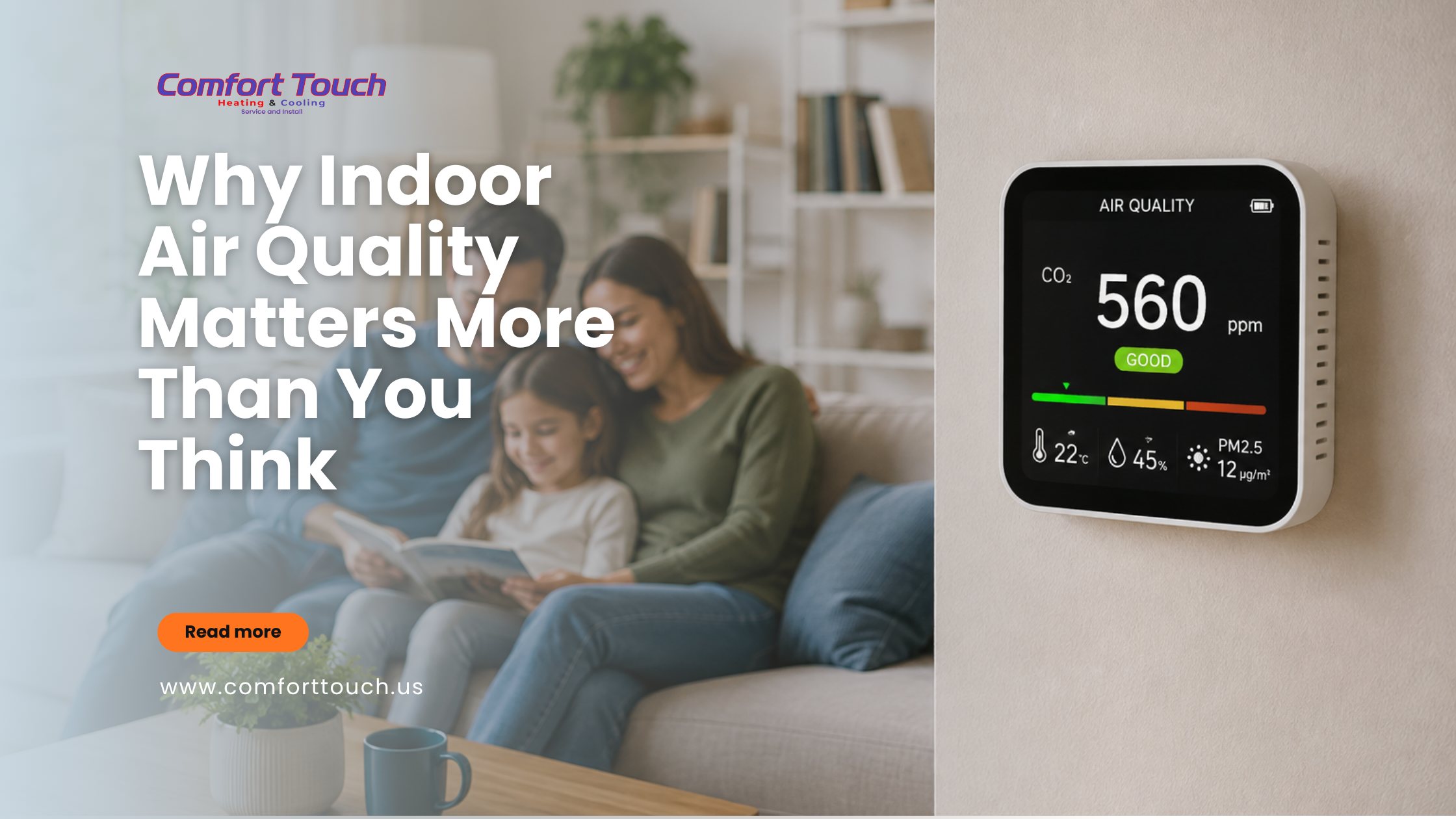
Indoor air quality affects your health, comfort, and even how well your HVAC system performs, yet it’s one of the most overlooked parts of home maintenance. Many homeowners focus on temperature control while ignoring the dust, allergens, humidity, and pollutants circulating through their living spaces. Why indoor air quality matters, how poor air quality affects your health, and what practical steps and HVAC solutions can help you maintain a healthier indoor environment.
What Is Indoor Air Quality?
Indoor air quality refers to the condition of the air inside your home, including the presence of dust, allergens, humidity levels, chemical pollutants, and airborne particles. Because most people spend the majority of their time indoors, the air circulating through a home has a direct and ongoing impact on daily health and comfort.
Common contributors to poor indoor air quality include:
- Dust, pet dander, and pollen trapped in HVAC systems
- Excess humidity that encourages mold and mildew growth
- Volatile organic compounds (VOCs) from paint, cleaning products, and furniture
- Poor ventilation that traps stale air inside
- Dirty or outdated HVAC filters
Why Indoor Air Quality Matters
Air quality inside a home is often worse than outdoor air because pollutants get trapped without proper ventilation. Over time, that buildup affects respiratory health, sleep quality, and general comfort, especially for children, older adults, and anyone with allergies or asthma.
How Poor Indoor Air Quality Affects Health
Poor indoor air quality can contribute to a range of health issues, particularly with prolonged exposure. While symptoms vary from person to person, common effects include:
- Increased allergy symptoms such as sneezing, congestion, or itchy eyes
- Worsened asthma symptoms or more frequent flare ups
- Headaches or fatigue linked to poor ventilation
- Dry or irritated skin from excess humidity or dryness
- Disrupted sleep due to airborne irritants
These symptoms don’t automatically confirm a specific health condition, and anyone experiencing ongoing respiratory or health issues should speak with a healthcare professional rather than relying on air quality changes alone.
It’s also worth noting that the effects of poor indoor air quality tend to build gradually rather than appear all at once. A home might feel comfortable temperature wise while still circulating dust, allergens, or excess moisture that slowly affect how residents feel over weeks or months. This is part of why indoor air quality is easy to overlook compared to more obvious issues like a broken air conditioner or a noisy furnace.
Benefits of Improving Indoor Air Quality
1. Better Respiratory Health
Reducing airborne dust, allergens, and pollutants can ease breathing for people with asthma, allergies, or general sensitivity to airborne particles.
2. Improved Sleep Quality
Cleaner, properly humidified air supports easier breathing overnight, which can lead to more restful, uninterrupted sleep.
3. Reduced Odors and Stale Air
Better ventilation and filtration cut down on lingering odors from cooking, pets, or household products, keeping indoor air feeling fresher.
4. Lower Strain on Your HVAC System
Clean filters and well maintained ventilation systems help your HVAC system run more efficiently, since it doesn’t have to work as hard to push air through clogged components.
5. A Healthier Environment for Sensitive Groups
Children, older adults, and those with existing respiratory conditions tend to benefit the most from improved indoor air quality, since they are generally more sensitive to airborne irritants.
Indoor Air Quality Solutions for Homes
Air Purification Systems
Air purification systems are designed to filter out dust, allergens, smoke particles, and some airborne pollutants before they circulate through your home. Many modern systems integrate directly with existing HVAC ventilation systems, allowing air to be filtered continuously rather than relying on a standalone unit in a single room.
HVAC Maintenance Services
Routine HVAC maintenance services, including filter changes, duct inspections, and system tune ups, play a major role in maintaining healthy indoor air. A poorly maintained system can circulate more dust and allergens rather than removing them.
Humidity Control
Both excess humidity and overly dry air can affect indoor air quality. Excess moisture encourages mold growth, while very dry air can irritate the respiratory system. Balanced humidity levels, often managed through your HVAC system, support a more comfortable and healthier indoor environment.
Improved Ventilation
Bringing in fresh outdoor air and properly venting stale indoor air reduces the concentration of pollutants that build up over time. This is especially important in newer, tightly sealed homes where less outdoor air naturally exchanges with indoor air.
How to Improve Indoor Air Quality Naturally
Alongside professional HVAC solutions, a few simple habits can support better air quality:
- Change HVAC filters on a regular schedule.
- Vacuum and dust frequently to reduce settled particles.
- Use exhaust fans in kitchens and bathrooms to reduce moisture and odors.
- Keep indoor plants that are known to support air quality.
- Reduce use of products that release strong chemical fumes indoors.
These steps work best alongside a properly maintained HVAC system rather than as a replacement for it. On their own, they can help reduce day to day irritants, but they won’t address deeper issues like clogged ductwork, an aging filtration system, or humidity imbalances that only a full HVAC inspection can identify.
Frequently Asked Questions
How do I know if my home has poor indoor air quality? Common signs include persistent dust buildup, musty odors, more frequent allergy symptoms indoors, and visible mold or moisture in certain areas. A professional indoor air quality assessment can provide a clearer picture.
Can an air purifier replace regular HVAC maintenance? No. Air purification systems work best alongside routine HVAC maintenance, since a poorly maintained system can continue circulating dust and allergens even with a purifier running.
How often should HVAC filters be changed to maintain good air quality? This depends on the filter type and household factors like pets or allergies, but many homes benefit from checking filters monthly and replacing them every one to three months.
Does humidity really affect indoor air quality? Yes. Too much humidity encourages mold and dust mites, while air that is too dry can irritate the respiratory system. Balanced humidity supports a healthier indoor environment.
When should I consider professional indoor air quality services? If you notice ongoing odors, visible mold, inconsistent humidity, or worsening allergy symptoms indoors, a professional assessment can help identify the cause and recommend the right solution for your home.
Conclusion
Indoor air quality plays a bigger role in daily comfort and health than most homeowners realize, influencing everything from allergy symptoms to how efficiently your HVAC system runs. Simple habits like regular filter changes help, but lasting improvement usually comes from a combination of proper ventilation, humidity control, and routine HVAC maintenance. Comforttouch’s residential HVAC services can help assess your home’s air quality and recommend the right air purification or maintenance solution for a healthier indoor environment.