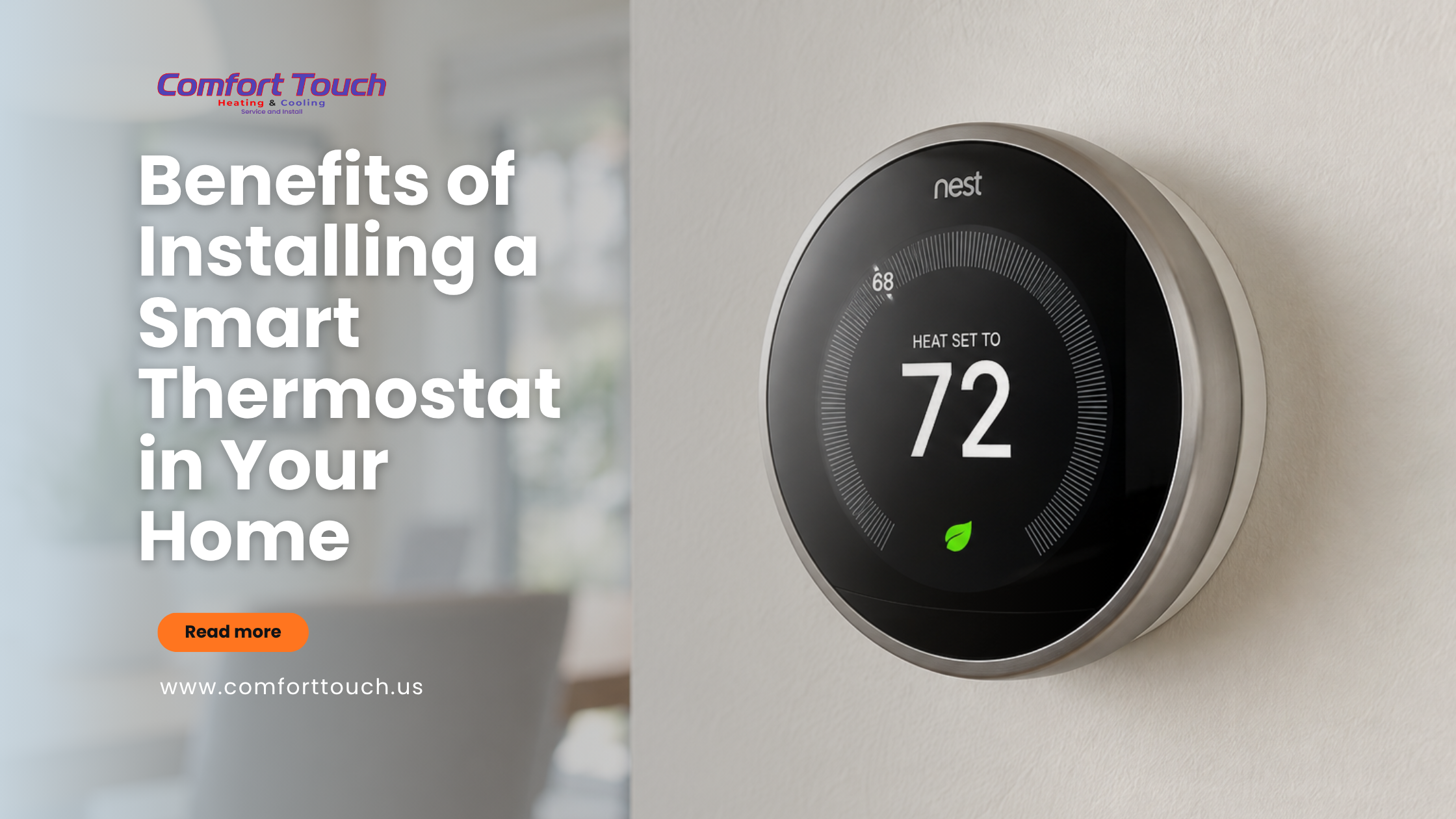
A smart thermostat installation gives you real-time control over your home’s heating and cooling, cuts energy waste, and helps your HVAC system run more efficiently. Instead of manually adjusting a dial or a basic programmable schedule, a smart thermostat learns your habits, responds to your location, and lets you make changes from your phone no matter where you are. How a smart home thermostat improves comfort, lowers utility bills, and simplifies day-to-day temperature control, along with what to expect from professional installation.
What Is a Smart Thermostat?
A smart thermostat is a Wi-Fi-connected device that manages your home’s heating and cooling system and can be controlled remotely through a smartphone app. Unlike a standard thermostat, it connects to your home network, tracks usage patterns, and adjusts settings automatically based on the data it collects.
Most models include:
- Wi-Fi connectivity for remote access
- Learning algorithms that adapt to your schedule
- Sensors that detect occupancy, humidity, or nearby motion
- Compatibility with voice assistants and smart home ecosystems
- Detailed energy usage reports
Smart Thermostat vs. Programmable Thermostat
This is one of the most common questions homeowners ask before scheduling a thermostat installation. A programmable thermostat only follows a fixed schedule that you set manually. A smart thermostat goes further by adjusting itself based on real-time factors.
| Feature | Programmable Thermostat | Smart Thermostat |
| Remote access | Rarely, if ever | Yes, via smartphone app |
| Learns habits | No | Yes |
| Occupancy detection | No | Yes, on most models |
| Energy usage reports | Limited or none | Detailed, ongoing |
| Voice assistant support | No | Yes, on most models |
| Setup complexity | Simple | Moderate, benefits from professional installation |
Key Benefits of Installing a Smart Thermostat
1. Lower Energy Bills
A smart thermostat reduces energy bills by avoiding the waste that comes from heating or cooling an empty house. Occupancy sensors and geofencing detect when no one is home and automatically adjust the temperature, so your HVAC system isn’t working to maintain a set temperature for rooms nobody is using. Over time, this kind of energy-saving thermostat installation can meaningfully reduce monthly utility costs, particularly in homes where temperatures were previously left unchanged around the clock.
2. Remote Temperature Control
Remote thermostat control means you can adjust your home’s temperature from anywhere using a smartphone app. Left for work without turning down the heat? Coming home early on a hot afternoon? You can make the change instantly rather than waiting until you’re back inside. This is especially useful for homeowners who travel often or keep unpredictable schedules.
3. Learning Capabilities That Adapt to Your Routine
Many smart thermostats study your daily patterns, such as when you wake up, leave for work, and return home, then adjust temperatures automatically to match. After an initial learning period, the system builds a schedule on its own, removing the need to manually reprogram settings every time your routine shifts.
4. Improved HVAC Efficiency
A smart thermostat improves HVAC efficiency by preventing the system from running longer or harder than necessary. Rather than reacting to temperature swings after they happen, many models anticipate heating and cooling needs based on outdoor conditions and past performance. This reduces strain on the equipment and can extend the lifespan of your furnace or air conditioner.
5. Better Home Comfort
Consistent, well-regulated temperatures throughout the day improve overall comfort. Features like multi-room sensors help even out temperature differences between rooms, so you’re not dealing with a chilly bedroom while the living room stays too warm.
6. Usage Insights and Reporting
Most smart thermostats provide monthly or ongoing reports showing exactly how much your system has been running and when. These insights make it easier to identify unusual patterns, such as a system running excessively due to a mechanical issue, and to make more informed decisions about your energy use.
7. Integration With Smart Home Systems
A smart home thermostat typically connects with voice assistants and other smart devices, allowing you to adjust temperature through voice commands or automated routines alongside lighting, locks, and security systems.
How a Smart Thermostat Reduces Energy Bills
The energy savings come from several combined factors rather than one single feature:
- Occupancy detection avoids conditioning empty rooms or an empty house.
- Geofencing adjusts temperature based on your phone’s location relative to home.
- Learning schedules reduce unnecessary heating or cooling during hours you’re reliably away.
- Usage reports highlight inefficient patterns so you can make adjustments.
- Weather-responsive adjustments help the system avoid overworking during mild weather.
None of these features require you to remember to make changes yourself, which is why the savings tend to be more consistent than with a manual or basic programmable thermostat.
What to Expect From Professional Thermostat Installation
While some smart thermostats are marketed as DIY-friendly, professional HVAC thermostat services help ensure the system is wired and configured correctly, particularly in homes with older HVAC systems, multi-zone setups, or heat pumps that require specific wiring configurations.
A typical residential HVAC service visit for thermostat installation includes:
- Assessing compatibility with your existing HVAC system
- Verifying wiring, including checking for a C-wire if required
- Mounting and wiring the new thermostat
- Configuring Wi-Fi connectivity and the smartphone app
- Testing heating and cooling cycles to confirm proper operation
- Reviewing basic settings and scheduling with the homeowner
Professional installation reduces the risk of wiring errors that could affect system performance or void manufacturer warranties.
Is a Smart Thermostat Worth It for Every Home?
Smart thermostats work well in most homes with central heating and cooling, but compatibility can vary. Homes with older HVAC systems, certain heat pumps, or multi-zone setups may need additional accessories, such as a C-wire adapter, to support a smart thermostat properly. Checking system compatibility before purchasing, or having a technician confirm it during a heating and cooling service visit, helps avoid installation issues later.
Frequently Asked Questions
Does a smart thermostat really save money?
Yes, in most homes. Savings vary based on climate, home size, and previous thermostat habits, but the combination of occupancy detection, remote control, and learning schedules typically reduces unnecessary heating and cooling.
Can I install a smart thermostat myself?
Some homeowners install compatible models themselves, but professional installation is recommended if your home has an older HVAC system, a heat pump, multiple zones, or if you’re unsure about your system’s wiring.
Do smart thermostats work with all HVAC systems?
Not always. Compatibility depends on your system type and available wiring. Checking your HVAC system’s specifications, or having a technician verify compatibility, is recommended before installation.
How long does smart thermostat installation take?
A standard installation typically takes under an hour for a single-zone system, though multi-zone systems or homes needing additional wiring may take longer.
Do I need a C-wire for a smart thermostat?
Many smart thermostats require a C-wire (common wire) to maintain constant power. If your home doesn’t have one, a technician can often install a C-wire adapter or run new wiring during the installation visit.
Conclusion
Installing a smart thermostat gives you more precise control over your home’s temperature while reducing energy waste through occupancy detection, learning schedules, and remote access. Beyond the convenience of adjusting your home from a smartphone, the efficiency gains can add up to meaningful savings on heating and cooling costs over time. If you’re considering a smart thermostat upgrade, having it professionally installed helps ensure it’s wired correctly and configured to get the most out of its energy-saving features. Comforttouch’s residential HVAC services can help assess your system’s compatibility and handle the installation from start to finish.